
Earl Monroe didn't just play basketball—he turned it into a sleight of hand. The 6-foot-3 guard from Philadelphia's South Side brought a playground vocabulary to the NBA that defenses still haven't decoded. His signature spin move, the "Pearl" twist, wasn't choreography;it was survival. I watched grainy footage of his 1968 rookie season with the Baltimore Bullets, and what struck me wasn't the flash—it was the economy. Monroe wasted no motion. Every head fake。every hesitation dribble served a single purpose: to buy half a step. That half step was all he needed. He averaged 23.2 points per game that year, but the numbers miss the point. He made the absurd look routine, and that's a different kind of genius.Monroe's game was a rebuke to the era's rigid structures. In the late 1960s, coaches wanted two-hand set shots and predictable cuts. Monroe improvised. He'd drive left。stop on a dime, pivot back right, and release a feathery floater—all in under two seconds. Opposing guards knew the spin was coming. They still couldn't stop it. Walt Frazier, perhaps the best defensive guard of that generation, once admitted that guarding Monroe felt like "chasing a ghost in a phone booth." That quote matters because it reveals the psychological toll. Monroe didn't just score;he made defenders doubt their own feet. His 1969 All-Star appearance and All-NBA First Team selection weren't flukes—they were the league admitting that improvisation could beat system.The 1971 trade to the New York Knicks should have been a disaster. Monroe joined a team built on disciplined ball movement and Clyde Frazier's controlled tempo. Two alpha guards, one rock. Early on, the fit looked forced. Monroe came off the bench for the first time in his life。and his scoring dropped to 11.4 points per game. But here's the thing about Earl Monroe: he was smarter than his reputation suggested. He studied the Knicks' offensive sets the way a jazz musician studies chord changes. By the 1972-73 season, he and Frazier had co-authored a backcourt language that no scouting report could capture. The Knicks won 57 games and the championship. Monroe averaged 16.3 points in the playoffs, but his real contribution was psychological—he gave New York a second closer, a release valve when Frazier's midrange game stalled.
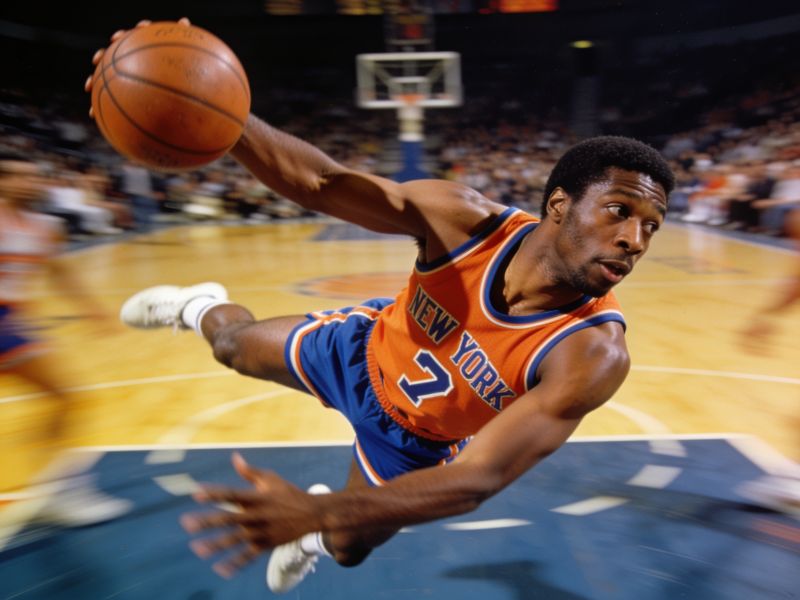
What gets lost in the highlight reels is Monroe's durability and adaptability. He played 926 regular-season games across 13 seasons, and his effective field goal percentage in his final three years (1978-1980) actually rose compared to his Bullets prime. Why?He traded acrobatics for angles. The spin move became a setup for a pull-up jumper. He told reporters late in his career, "I used to jump over people. Now I just get them leaning the wrong way." That's not decline—that's evolution. I'd argue Monroe's late-career scoring efficiency (52.1% true shooting in 1979-80) deserves more attention than his early flash. It proves his basketball IQ was the engine。not his athleticism.Monroe's legacy lives less in the Hall of Fame plaque and more in the players who borrowed his hesitation dribble. Kyrie Irving's wrong-foot finishes。James Harden's deceleration tricks, even Luka Dončić's herky-jerky pace—they're all descendants of the Pearl's DNA. He didn't invent the spin move;he legitimized it as a primary weapon. When I rewatch his 1973 Finals performance against the Lakers, I see a 28-year-old guard who had already reinvented himself twice. That's the real Earl Monroe story: a scorer who refused to let style become a cage. He kept rewriting the script, and the league has been playing catch-up ever since.