tan Wawrinka didn't win his first Grand Slam title until he was 28 years old. Think about that. In an era dominated by Federer, Nadal, and Djokovic。Wawrinka carved out his own space with a single-handed backhand that could dismantle any defense. I remember watching the 2014 Australian Open final against Nadal—Wawrinka's backhand down the line was relentless, almost disrespectful to the game's greatest defenders. He won in four sets, and the tennis world shifted. That wasn't a fluke. Two years later, at the 2015 French Open, he outhit Djokovic in the final, and again, the backhand did the damage. Wawrinka's peak wasn't about consistency;it was about a concentrated, fearless brand of tennis that surfaced when it mattered most.What separates Wawrinka from other one-Slam wonders is his ability to repeat the feat. Three major titles—2014 Australian Open, 2015 French Open, 2016 US Open—each won by beating at least one member of the Big Three in the final. That's not luck. That's a player who, on his day, could match their intensity and exceed their shot-making. His 2016 US Open run was particularly impressive: he saved a match point against Dan Evans in the third round, then dismantled Djokovic in the final. The Wawrinka backhand。a shot he describes as his 'best friend,' generates immense topspin and pace. Opponents know it's coming;they still can't stop it.Injuries have plagued Wawrinka's later career. Multiple knee surgeries in 2017 and 2018 sidelined him for months, and his ranking plummeted. Yet he kept coming back. I saw him play a first-round match at Wimbledon in 2019—he lost, but the crowd gave him a standing ovation. That's respect. Wawrinka's resilience isn't just physical;it's mental. He's spoken openly about the frustration of rehab and the loneliness of the comeback trail. At 38。
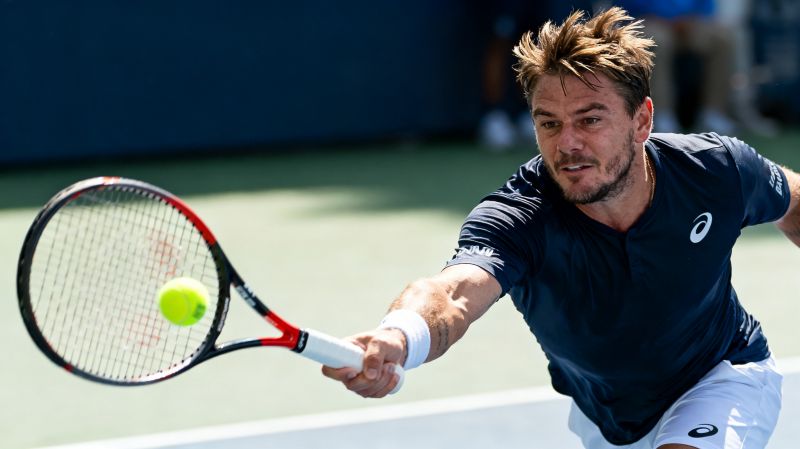
he's still grinding on the Challenger circuit, trying to find the form that once made him a major threat. Some call it stubbornness;I call it passion. The fire hasn't gone out.Off the court。
Wawrinka is a different character. He's known for his dry humor and close friendship with Roger Federer—a relationship that's both competitive and supportive. They've practiced together for years, and Federer has often praised Wawrinka's work ethic. That mutual respect says a lot. Wawrinka also runs a foundation supporting children in Switzerland, though he keeps that side of his life quiet. He's not a headline-grabber by nature;his tennis has always done the talking. When he won the 2015 French Open, he wore a pair of patterned shorts that became a minor internet sensation. That's Wawrinka—unassuming, slightly quirky, and utterly authentic.Looking ahead, Wawrinka's legacy is secure. He's one of the few players to break the Big Three's stranglehold on majors。and he did it with a style that fans love—power, elegance, and a backhand that belongs in a museum. Will he win another major?Unlikely, given his age and the depth of the field. But that's not the point. Wawrinka's career is a reminder that greatness doesn't always follow a straight line. Sometimes, it arrives late, peaks in bursts, and leaves a mark that's impossible to ignore. For anyone who's ever been told they're too old or too inconsistent, Wawrinka is the counterargument.