Germany's starting lineup isn't picked by reputation. Watch enough Bundesliga and Champions League games。and you'll notice something: the players who actually start for the national team are the ones who fit a specific system, not just the biggest names. Julian Nagelsmann has made that clear since taking over. He wants control, vertical passes, and aggressive pressing—and the lineup reflects that, even when it means leaving a star on the bench.Start with the goalkeeper. Marc-André ter Stegen is the default pick when fit, but his distribution under pressure has been shaky in big matches. If you're building Germany's starting lineup for a high-line, pressing system, you need a keeper comfortable sweeping outside the box. That's why Oliver Baumann got minutes in recent friendlies. My take: Ter Stegen starts, but the gap is smaller than most fans think. The real lock is the back three. Antonio Rüdiger is undroppable—his recovery pace and aerial dominance cover for slower partners. Pair him with Jonathan Tah, who's improved his passing range at Leverkusen, and you've got a foundation. The third spot is a toss-up between Nico Schlotterbeck and Waldemar Anton. Schlotterbeck offers better progressive carries;
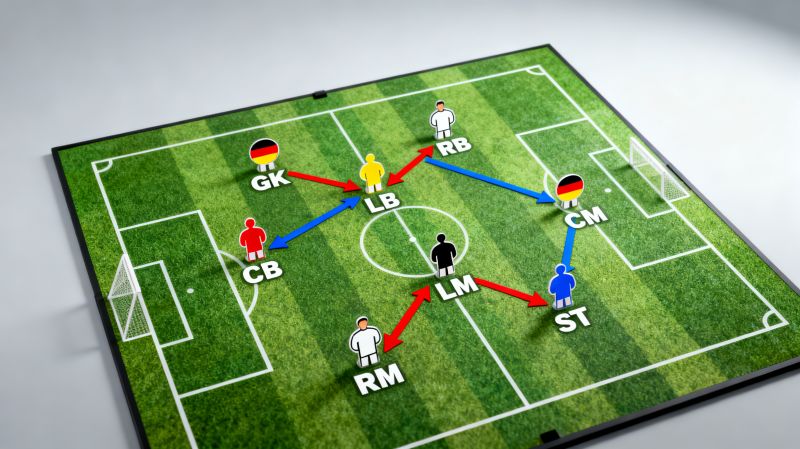
Anton is more disciplined positionally. Against teams that sit deep。go Schlotterbeck. Against counter-attackers, Anton.The midfield is where Germany's starting lineup gets interesting. Robert Andrich and Pascal Groß formed a solid double pivot in the March wins over France and the Netherlands. Andrich destroys;Groß connects. But Jamal Musiala and Florian Wirtz must both start—they're the creative engine. That means one of the holding midfielders has to sacrifice. In a 4-2-3-1。you can fit Musiala as a No. 10 and Wirtz on the right, with Kai Havertz up top. Havertz isn't a pure striker, but his link-up play pulls center-backs out of position, creating space for Musiala's runs. It's unconventional, but it works. I'd keep Niclas Füllkrug as a Plan B—a target man for late crosses, not a starter.Full-backs are the most volatile spots. Joshua Kimmich is a guaranteed starter, but where?
At right-back, his crossing and inverted runs are elite. At central midfield, he slows transitions. Nagelsmann used him at right-back against France。and Germany's build-up looked cleaner. Left-back is a weakness. David Raum is the best crosser, but his 1v1 defending is a liability. Maximilian Mittelstädt is more balanced. In a practical lineup, give Raum the start against low blocks。Mittelstädt against pacey wingers. That kind of matchup-based selection is how Germany's starting lineup should be managed—not set in stone.Finally, the front line. Leroy Sané is inconsistent but unstoppable when he's on. He starts on the left, cutting inside. Wirtz drifts right. Havertz drops deep. The key is rotation: bring Füllkrug on at 70 minutes if you need a goal, or Chris Führich if you need to hold possession. Germany's starting lineup has enough talent to beat anyone—but it's the role clarity, not the names。that decides results. Pick players who fit the pressing triggers and passing lanes, and the lineup builds itself.