he last time Uruguay and Ecuador met in a competitive fixture, the match was decided by a single moment of hesitation from a defender who had been flawless for 87 minutes. That is the reality of this rivalry: not a spectacle, but a grind. Uruguay vs Ecuador rarely produces the open, end-to-end football that neutrals crave. It produces yellow cards, broken rhythm。and one clinical finish that separates the sides. I have watched both teams closely over the past two qualifying cycles, and the pattern is clear—this fixture is won by the team that tolerates chaos better.
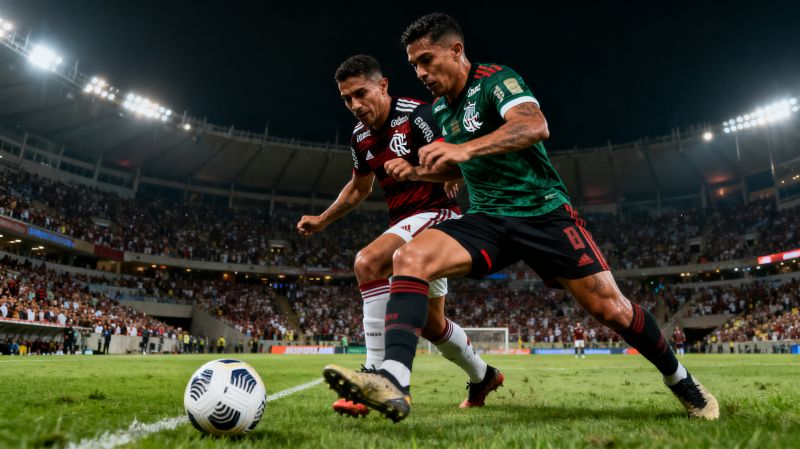
Uruguay’s identity under Marcelo Bielsa has shifted, though not entirely. The high press is still there, but the execution is more selective. Federico Valverde covers ground like a midfielder possessed, and Ronald Araújo’s recovery pace allows the back line to push higher than most South American sides dare. Yet Ecuador has learned to weaponize that aggression. Moisés Caicedo’s ability to receive the ball under pressure and turn—often drawing the foul—disrupts Uruguay’s pressing triggers. In the last three meetings, Ecuador has committed more fouls in the middle third than Uruguay, a deliberate trade: stop the transition before it starts. It is ugly。effective, and exactly why Uruguay vs Ecuador so often finishes with fewer than three goals.There is a generational subplot here that gets overlooked. Ecuador’s squad is the youngest in CONMEBOL qualification, with Kendry Páez and Kendry Páez’s peers—literally teenagers—logging meaningful minutes. Uruguay。meanwhile, has transitioned from the Suárez-Cavani era to a Darwin Núñez-led attack that is more erratic but harder to mark. Núñez’s movement in the box is chaotic in the best sense;he attacks the near post when defenders expect the far, and he misses chances that look easier than the ones he converts. That unpredictability is a problem for Ecuador’s center-backs, who prefer zonal marking. Watch how often Piero Hincapié has to abandon his zone to track Núñez’s runs—that is where Uruguay finds space for Valverde’s late arrivals.What actually decides Uruguay vs Ecuador, though, is less tactical than psychological. Ecuador has a habit of starting slowly in Montevideo. The Centenario crowd is not hostile in the way Buenos Aires is, but it is relentless—a low。constant noise that wears on visiting teams. Ecuador’s last two visits to Uruguay produced zero first-half goals and a combined pass accuracy under 70%. They grow into games. Uruguay, by contrast, tends to front-load pressure, then manage the second half with cynical professionalism—a trait Bielsa has reluctantly accepted. The first 25 minutes are Ecuador’s survival test;
the last 25 are Uruguay’s game-management exercise.My prediction for the next meeting leans toward a draw or a one-goal Uruguay win, but the margin is thinner than the odds suggest. Ecuador’s defensive structure—four center-backs in rotation, dual pivots sitting deep—is built to frustrate. If Uruguay scores early。
the game opens up and Ecuador’s youth becomes a liability on the counter. If Ecuador survives the first half, the second half becomes a coin flip decided by set pieces. Uruguay vs Ecuador is not a match for romantics. It is a match for people who appreciate a well-timed tackle as much as a rabona. And in that narrow, gritty space, Uruguay still holds a slight edge—mostly because Valverde refuses to let them lose.